Ammonite

Ammonite

Monday, April 8, 2013

Coldfoot Alaska: Arctic Gear

While I was visiting Coldfoot, I met lots of interesting people. There was a family from Mexico, a father and son from Texas, a guy from England, two women from Colombia, a couple from Spain. One of the major issues most of them had was with what to bring in terms of clothing. Many of them bought boots and things specifically for the trip, and none of it was warm enough. So I thought I'd post a few comments on what really works to keep you warm and what doesn't, as well as a few tips I gathered from inside sources (i.e folks who live and work up there).
I know that many people will just bring what they have and make due, and that's fine, but if you are going to go out and buy stuff, it might be helpful to know what you should be looking for. Also I guess I should mention this is all about gear for the extreme cold. This isn't for 40 degree days in the spring time or the middle of the summer.
Arctic Boots by Northern Outfitters
OK. So first off is foot wear. This held the most disappointment for the people I spoke to. Many of them had gone out and purchased boots costing anywhere from $70 to $120 and none of them worked. In extremely cold weather what you need is a boot that has no rubber on the body of the boot, is at least a half size (if not a whole size) larger than your foot, and has a very thick padded sole.
The boots my brother has are made by Northern Outfitters, and cost $120. They are called "Mountain Pack Arctic Boots". These are the best boots I've ever worn in cold weather. They are huge and make your feet look three times the normal size, but the work. They had about 4" of insulation between the bottom of my foot and the ground and they were really comfortable.
If you aren't interested in spending that kind of money then I'd suggest getting a pair of ski boots a size or so larger, and doubling or tripling your socks. Try to get something waterproof, but do not get rubber rain boots with a liner. Your feet will freeze.
Most of us aren't going to go out and spend $500 for a coat rated to -50 degrees. But besides that my recommendation would be your warmest coat that is windproof. The windproof part is critical. At extremely cold temperatures the wind cuts through canvas and other materials like a knife. Also if you have a coat with an attached parka hood, and deep pockets that's all the better.
About half the people I saw didn't have snow pants. I didn't the first time I went, and it was miserable. One night we went out to watch the Aurora, and I had on a warm coat and jeans. My jeans did nothing to keep me warm, even with long johns on underneath. I felt like I was half naked. My legs actually hurt they were so cold. It was only about -2 at the time, so I can't imagine what it would feel like at -20. I also went for a hike without snow pants, and  I got snow under my jeans, and had nerve damage on the outside of my ankles for about a year. No joke. Even if you get cheap snow pants (try looking at a thrift store if you only want them for the trip) it is 100 times better than no snow pants. The elastic on the bottom covers your boots, and helps keep snow out. This year I brought a good pair, and it made a world of difference. Also, while we are on the subject of pants, here is a tip for what to wear under snow pants. Avoid jeans. They just don't work. Instead go for a pair of long johns, a comfortable pair of yoga pants or sweats. If it's really cold do both.  I brought two pairs of jeans and one pair of sweats and I wore the sweats almost every day, because they were much more comfortable and warm.
Fleece neck gaiter by Carharrt
The next thing is layering. I brought turtle necks, t-shirts, a vest,  a sweatshirt, and a big turtleneck sweater. The sweater didn't work when I wore it by itself. It made me really sweaty, and then when I'd move a certain way I got a surprisingly chilly breeze up my back. I constantly felt too hot or too cold. Layering is the way to go. I did a combination of turtleneck, t-shirt, then vest/sweater on top of that, and then my coat. This was the perfect arrangement for me, and it kept me warm, but not too hot. Having a couple layers close to your skin, and then adding a couple looser ones on top helps regulate body temperature. And when it got warmer (or I did) I was able to adjust the layers to make myself more comfortable. Lots of folks up there wear plaid shirts as a top layer, or a light fleece sweatshirt.
In terms of hand wear I suggest mittens over gloves (or maybe a combination of thin gloves under mittens). Gloves separate fingers and make them colder in my experience. Mittens keep my fingers warmer, and I can ball up my fists when I am really cold to protect them. And of course the usual hat/scarf. In the arctic the hats with the ear flaps would probably work best. I had a regular knit hat, and my ears still got cold somehow. I wish I'd brought a fleece headband to wear underneath. An alternative to the traditional scarf is the fleece neck gaiter. This keeps your neck and your face warm and is ideal for dog sledding. My brother actually made sure I bought one before we left Fairbanks, and it was a good call. I wore it almost every day.
Well, that's all I can think of. Good luck and hope this helps if you ever plan a trip to the Arctic in winter!

Sunday, April 7, 2013

Coldfoot Alaska: How Cold is Cold?

Frosty after dog sledding.
Living in California I realize that my concept of what is cold may be a little warped. It rarely gets below 35 degrees even in the dead of winter. But this last trip up to Coldfoot has educated me. 
The first day I was in Fairbanks it was 0 degrees outside. At 0 degrees, the hairs in your nose freeze every time you breathe in and defrost every time you exhale. Your eyes water for no reason, and every exposed centimeter of skin feels like it's been dipped in liquid nitrogen. And after that it just hurts. Most of me was covered, but my face suffered almost instantly. I kept putting my mittens up to block the wind. At 0 degrees groceries will freeze in your car if left to long, and cars won't even start sometimes! In Fairbanks most places had parking spots where you could plug in an engine warmer, and almost every vehicle I saw had a little plug sticking out of the front of it.
When I got to Coldfoot the temperature dropped to -30, and surprisingly that didn't feel all that much colder. It almost felt warmer. That could be because it was less windy and maybe I just didn't notice. Or it could have been because I was better outfitted with snow pants, and something to cover my face. It kind of hurt my eyeballs a little though. And again, if I took my mitten off for a second, my hand was frozen. My brother says that at -30 and below the thing you have to understand is how quickly you can get frostbite. At higher temperatures, it takes longer to freeze you fingers and toes all the way through. But at super cold temps it sometimes only takes a minute or two. That goes for the skin on your face, and your ears etc. 
My advice to those who plan to be out and about in the ultra cold is to be very aware of any exposed area of your body. Most of the covered areas were toasty warm, but when my face started to hurt, or my ears became numb, or my fingers icy,  from trying to manipulate my camera I immediately adjusted to the situation. Sometimes that meant pulling my hands inside my jacket, or inserting them between my neck and my scarf where it was warm. Sometimes it was pulling my parka hood completely over my face for a few seconds, sometimes it meant going inside and getting a warmer hat, and then wrapping an extra scarf over my ears. The thing to keep in mind (at least what I have been told) is that it takes a lot longer to get frostbite on parts that are covered. It may not feel any different (i.e. your hands might still feel cold) but it does matter.
My last two days in Coldfoot hovered around 30 degrees. When I stepped outside the first morning  and it was 17 degrees it actually felt warm! Like I didn't bother to zip my coat or put a hat on. I wasn't trying to be "tough" it just really did feel warm. As the temperatures climbed another strange thing started happening, all my clothes started to get wet. My mittens, my boots (which were OK in negative temperatures) got soaked, and then froze into a block of ice, my scarf got sweaty and so did my hair under my hat. Then when a big gust of wind would shoot up the valley all of it seemed to freeze on my body. The coldest I was the entire trip was the afternoon the temperature stayed about 30 degrees. I felt wet and cold, and my fingers and toes ached. That didn't happen at negative temperatures.
I've concluded that some of the difference must have to do with a.) the humidity in the air. At -20, there is almost no moisture, so most of the air around your body may be cold but it is dry as well. At 30 degrees that's all different. There is much more moisture in the air, and b.) Everything is wetter when it is warmer. If you don't have waterproof gear then you are in trouble. The snow is stickier, surfaces are wet, and that accumulates on your boots, in your hair, on you hat, etc. It is just more uncomfortable. Like being in a drizzly rain.
I am clearly not an expert on cold temperatures, having only spent a week up there, but I think that it was helpful to have someone explain to me what's most important at what temperatures. Bottom line:
Utra cold = cover up EVERYTHING.
moderately cold = Waterproof gear (boots, mittens, pants)

Dick Mackey: Chance Meeting on the Haul Road

Jason and the infamous Dick Mackey!
If you've ever driven the Dalton Highway, you have a pretty good understanding of what the word remote means. It's about as remote as a person can get in a car. There are only a couple small stops north of Coldfoot Camp. There is the turnoff to Wiseman, A port-o-potty near Sukapack, and one at the base of the Chandalar Shelf, and a DOT station near Atigun Pass. That's it. So it's all the more amazing that we ran into one of the most famous mushers in all of Alaska along the way.
Our Arctic Safari Tour left Coldfoot at around 11:00 am, and as we headed up the first few miles Jason (our tour guide, and my little brother) gave us a brief history of Coldfoot. The latest chapter of that story involved the founding of the truck stop back in the 80's by a guy named Dick Mackey. As I understand it he convinced a friend to join him for the summer selling hamburgers and coffee to truckers out of a converted school bus. They set up in Coldfoot, and Mackey spent the next 9 years growing the camp and his business.
We continued on the tour, and after travelling all the way to the edge of the North Slope, we turned around and headed home.
We pulled off at the viewing are for the Chandalar Shelf, and noticed a tent, a dog sled, and pickup truck with dog box that hadn't been there earlier when we were driving up. There were two men standing beside their gear talking. They were both older, with a slightly wrinkled "Alaskan" quality about them. The Alaskan quality I am referring to is the strange way in which residents of the far north tend to look like they are comfortably chatting at a tiki bar in Hawaii when standing on the side of the road in windy -20 degree weather having a conversation. But I digress. Anyway we hopped back on the road, but only got a few feet when one of the men, the one in the circa 1990 teal, purple and pink jacket covered in patches, hailed us down.
Jason recognized him immediately, and quickly informed the rest of us that before our very eyes, was the famous, No!, the infamous, Dick Mackey!
Four hours earlier none of us would have had any idea who Dick Mackey was, but after our history lesson about Coldfoot, and learning that he'd run (and helped found) the Iditerod, we were all appropriately in awe. I mean what are the chances? We were literally out in the middle of nowhere!
We got out and talked with him and his buddy. He was about the friendliest guy you ever met. And despite his being...somewhere around 70 I think, there was a youthfulness about him and the way he talked and gestured that made him seem like a much younger man. He had a great sense of humor, and a smile to match it. His friend had a similar air.
He explained that he was up there with some friends and they were going caribou hunting on the Shelf. He told us a couple stories about being in -85 degree weather, and was a sport about having his photo taken with everyone. He was really a neat guy.
On my way home from Alaska I found a memoir of his in the gift shop at the Fairbanks airport. It was called One Second to Glory. I started reading it in the store. The Mackey legacy in Alaska is an impressive one (he has several sons who are also mushers, and his granddaughter is too), but his origins are humble. Dick went to Alaska a penniless young man with a sense of adventure, and no idea what he was doing. His start in dog-sledding occurred in much the same way. Very much like my brother actually. And his tenure in Coldfoot also began as a wild and crazy idea.
I decided I needed to buy the book, and I read the whole thing on my 3 flights back home. His story is interesting, and funny in parts, but more than that it was inspirational. It's like the theme from the Pixar movie Ratatouille where they say "Anyone can cook.", except the phrase here is "Anybody can mush."


Coldfoot Alaska: Arctic Safari Tour


Our tour guide Jason.
I went on the Arctic Safari Tour while visiting Coldfoot Camp. It's a tour that takes you further up the Dalton all the way to Atigun Pass. If you've done the drive from Fairbanks to Coldfoot (instead of flying) then you might wonder if the Safari will just be more of the same. It's not. Coldfoot lies just at the southern end of the Brooks Range, so what you drive through on the way between Fairbanks and Coldfoot is different. The Safari takes you straight through the Brooks Range all the way to the North Slope. The mountains are beautiful, and depending on when you go (I 've only gone in winter) there are also some rivers that I bet are beautiful when they are not covered in ice.  The geology also becomes pretty spectacular as you get closer to the pass. Even if you aren't into rocks, it's impressive enough to admire.
I am not sure what the animal situation is in summer, but in winter the main attractions are moose, ptarmigan, caribou, and Dall sheep. I am guessing in the summer black bears and grizzlys are around as well. On the tour I went on we saw three moose, a singular Dall sheep, and then a whole herd of 9 individuals further up the road, and a flock of snowy white ptarmigan. I guess I should say here that for the most part the animals were a ways off the road. It was the same the last time I took the trip. They don't like the trucks and noise, so they tend to stay back. But while they weren't cruizing down the shoulder, they were still visable and really beautiful. I only mention it here because I think that some people might feel disappointed they aren't up close. If you own a pair of binoculars I would totally recommend you bring them. Being able to see the amimals up close really made it more personal, and made up for the fact that they were kind of too far to photograph.
The drive is a long one, and the tour takes almost all day (from like 11:00-6:00) but it's worth it I think. It comes with a sack lunch, and there are hot beverages the whole time, and you can spend all your time looking out the window while the tour guide navigates the road.
If you sit in the back I would reommend requesting that the seats be rotated every couple stops, because the best photographs are out the front window. But I rode in the back the whole time and I didn't miss anything.  And still got some nice shots with my camera.
Also whenever possible the tour guides will pull of and let everyone out to photograph something interesting. They will only stop though if they can pull the van completely off the road. And you aren't allowed to leave the pullout areas to walk on the shoulder of the road either. The semi-trucks are dangerouns, as well as the gravel they can kick up, and for everyone's safety they limit when and where the tour can stop.
The tour passes the tree line (most tree lines are formed by going up in elevation, but this one is formed by latitude and the limits of sunlight) and there is a dramatic change in scenery as you climb the Chandalar Shelf and head up into Atigun Pass.
The final thing about the tour was that the guide provided a lot of information about the Camp, Wiseman, the Dalton itself, the pipeline, the local wildlife, and they were really interested in answering questions when they could, and sharing antecdotes along the way. On our safari we learned about the history of Coldfoot, and then by pure coincidence we ran into the guy (Dick Mackey) that actually founded the camp in the 80's. He's also a famous Iditerod musher! That was really awesome! And more exciting since we all had just learned who he was.
It was a fun trip, and I saw some really beautiful animals.  See below for a couple of my photos.
Semi truck heading north.

Jason taking photos of guests.

The Brooks Range and Ptarmigan Tracks

Ptarmigan

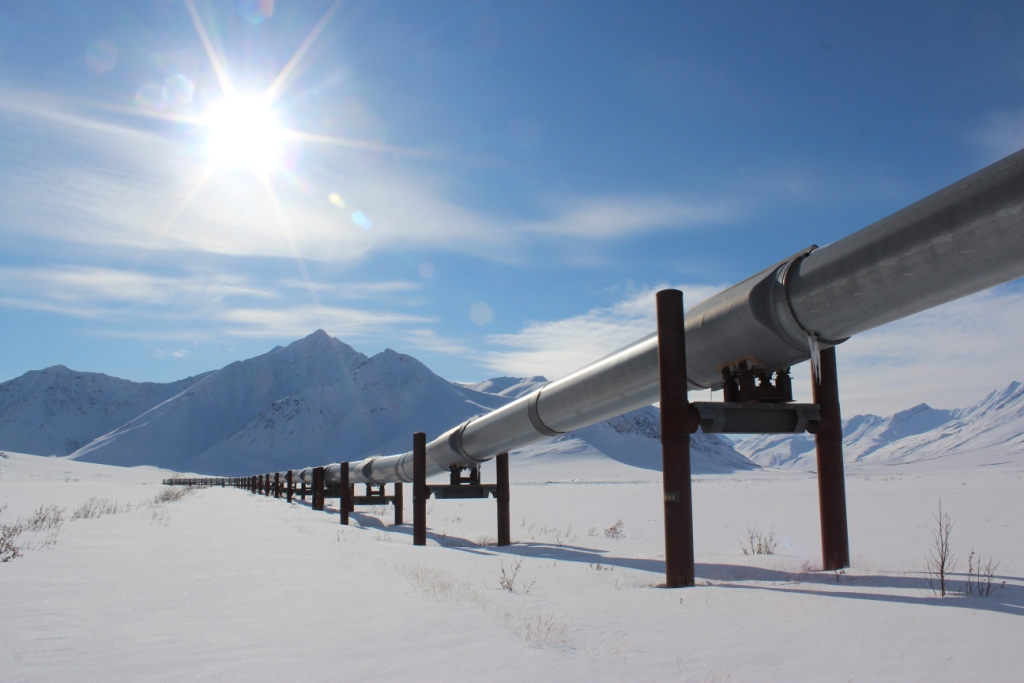
The Pipeline

Ptarmigan flying away.

The Pipeline and the Brooks Range

Lone Dall sheep

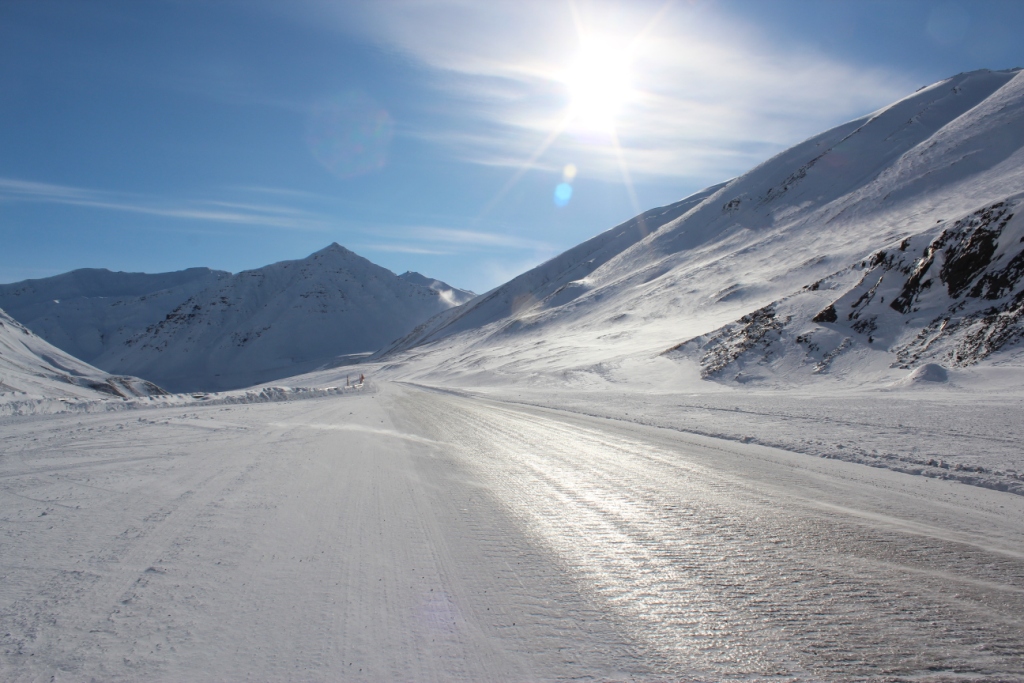
The icy Dalton

There are 8 Dall sheep in this photo!

Dick Mackey and pal.

Dick Mackey and Jason.

Watching mooses!

The moose that we were watching.

Friday, April 5, 2013

Lingonberry Juice


A fresh taste of the Arctic.

While I was up in Alaska, I had the opportunity to meet some of the folks living out in Wiseman. Wiseman is located about 15 north of Coldfoot Camp.
While visiting I was offered a cup of homemade lingonberry juice. I had no idea what a lingonberry was but they were hand picked in the surrounding countryside, so I couldn't turn down such an opportunity! I said "Sure!"

Lingonberries are like cranberries except they are smaller and grow closer to the ground. They are the same pretty color though. They are common in boreal forests and the Arctic tundra. They are popular in many Scandinavian dishes and recipes.
Jack, the guy who we were visiting, said they also make a delicious bread. He hand picked and reduced the berries in water to make the juice all himself.
It was served in a coffee mug, with a spoon. It was very similar to cranberry juice, except with much less sugar than the commercial stuff. But the best part was the pile of berries at the bottom. For those I used the spoon. They were so tender and tart and yummy! 
What a neat opportunity hu?


Wednesday, April 3, 2013

Coldfoot Alaska: The Aurora Borealis Tour to Wiseman

The cabin in Wiseman
 When I was up in Coldfoot, I went on the Aurora Tour to Wiseman. You might wonder if it's really necessary to to take the tour. And the answer is, that depends. You can see pretty much the same Aurora from Camp, so if all you want to do is look at them, then you probably don't need to go up to Wiseman. But if you are trying to photograph them, or if it's -30 degrees, you may run into problems. There are lots of lights in Coldfoot. When I was there some miners had a search light on all night, so they could work on their vehicles, and bthere is a bright light at the gas pumps, and  there are semi-trucks coming and going all the time. It tends to wash out the night sky and lower the contrast between the Aurora and the dark. You can walk out away from the camp a little ways, but then you have to worry about equipment/ trailers that are laying around, traffic, and if it's cold, you can't run back inside to warm up. At 30 below that can literally ruin the experience.
In my opinion the tour in Wiseman is great for 3 reasons.
1.) You have a tour guide who sits outside THE WHOLE TIME, while you sit out the boring times in a warm cabin sipping hot tea. When things start happening he/she will run inside and let you know so you can run outside and enjoy them. Some nights the Aurora are out early on, but on others they don't appear till 2:00 in the morning. If you can imagine how cold you'd be by two a.m. if you had to sit out there waiting for them, you can instantly appreciate the fact that you don't have to. It's much more enjoyable to view/photograph the Aurora when your fingers and toes aren't numb with cold, and your face isn't frozen. And the best part is, with the guide, you don't have to worry about missing anything exciting.
2.) The scenery up at Wiseman is much prettier and makes for a much better foreground if you are taking photos. There are three little log cabins in the immediate vicinity, and trees in three directions, and of course mountains. There are also no bright lights like there are in Coldfoot.
3.) Most tours you meet a Wiseman local named Jack. He is a walking encyclopedia on the Arctic. Pretty much anything you want to know about the surrounding area, he can tell you. And as an added bonus he also knows how camera settings need to be adjusted to best photograph the Aurora. That was super helpful (even though my camera was out of focus the first night (sad face)). He keeps you company inside while the guide keeps lookout outside.
My experience was that it was so nice to be able to warm up, without having to worry or wonder if I was missing something spectacular outside. Jack was really interesting, the cabin was warm, and I got to meet new people as we sat inside and chatted. And then, when the Aurora did come out I was ready and toasty and didn't have to worry about whether or not I was going to get frostbite.
 The first night I went, the Aurora barely appeared. We waited 3.5 hours and there were only two little bands the whole time. The second night I went there was much more activity, and so the guide (after an hour of good viewing) said that he would only come inside if it got extra-super spectacular. That happened twice. So most people stayed inside after the first hour and only came out when things got exciting.
I would advise those going up to the Arctic specifically to view the Aurora to plan for AT LEAST 3 nights in Coldfoot (and maybe 1 night in Fairbanks). Sometimes they don't come out, or it's overcast, or a storm is blowing through or something. But chances are pretty good you will see them if you are up there for 3 nights or more. Don't be worried by light clouds, or a full moon either. Neither of those will affect the viewing as long as the Aurora are really showing.

The Aurora over the Dalton Highway

The Aurora over the Brooks Range

Aurora almost straight overhead.

The Aurora and the Ursa Major

Our tour guide Jason.

Inside the cabin, getting warm.

Aurora on a faint night.

Coldfoot Alaska: The Trucker's Cafe


The Truckers Cafe
If you are heading up to Coldfoot Camp, you might be wondering what to expect in terms of food. Well, you options for breakfast, lunch, and dinner are conveniently narrowed down to one option: The Truckers Cafe.
But what exactly does that mean?
1.) It means that ANY food you do not bring with you will be purchased in the cafe. There are no quickie-marts, vending machines, hot dog stands, salad bars, no nothing.
2.) The menu is practical for where the truck stop is located and for the people in charge of cooking (i.e. it's a long way to transport fresh produce that only keeps for a day or two, and (surprise) there is no executive chef.) There are mostly things like burgers, fried cod, chicken fingers, sandwiches, melts, tater-tots, fries, pancakes, eggs, bacon, and grilled cheese. All delicious but probably not so low on calories.
3.) That being said, there are some healthier options available. You can get a sandwich on wheat bread, a garden salad with a side of grilled chicken on it, and their soups of the day are not only homemade, but quite delicious. I had soup almost everyday for lunch or dinner. And they make oatmeal for breakfast.
4.) The menu is not so bad for vegetarians. There are egg sandwiches, pancakes, egg salad sandwiches, salad, some of the soups, grilled cheese), but pretty tough for vegans. In terms of breakfast it is limited to oatmeal, or hash browns and ketchup (or maybe with some veggies on it if they have them), and for lunch either salad, peanut butter and jelly, tots, and fries. My vegan brother actually ordered a salad with tots on it and it looked pretty good. But in general it's slim pickings. The pancakes have milk, and most of the other stuff that could be vegan had some kind of dairy product in it. I'd suggest if you are vegan and planning to spend a few days up there to bring some of your own supplemental  food.
5.) The Arctic Safari tour gets its lunches from the Cafe, and it's actually pretty great! Your choice of sandwich, condiments, chips, fruit, cookie, and beverage. I would have been the coolest kind in school if I'd have brought lunches like that every day. The sandwiches are big, and as good as most places. And I think you can order a lunch to go, if you are heading up the road, or back down to Fairbanks.
6.) There are a couple highlights on the menu (this is based on my personal opinion). For breakfast it's the oatmeal (it's not slimy or watery, and comes with milk, brown sugar and raisins), and the reindeer sausage. If you do order the sausage (comes as 2 links, each split in half), note that it's probably enough for 2 people to share. I love it, but can only eat one link at a time. It's salty and tasty, and in my humble opinion is a nice balance to the healthy semi-sweet brown sugar and oatmeal. The club sandwich is probably my favorite thing on the whole menu. I don't know why it tastes better than any other club I've ever had, but it just does. It probably has about 1000 calories, but it's truly worth every one. I paired it with soup or salad instead of fries, just to alleviate some of the guilt I felt at ordering it every other day. The soup's of the day were excellent, and so perfect for those -30 degree evenings. They are all made from scratch, and I found every one I tried to be wonderful and totally tasty.
7.) The Cafe is the only place to get coffee, and it ain't no Starbucks. The regular is OK, and pretty much always fresh. The decaf is not so great. It comes in a tea bag. But it is drinkable. They have a great selection of teas, and an endless supply of hot chocolate. I mixed decaf and hot chocolate, and it was better than the decaf by itself. All of the tours provide hot water and the above options (although the regular coffee is instant on the tours) and are especially wonderful on the late night Aurora tours up to Wiseman.
8.) Around the corner (in the same building) is the saloon, and the only place in camp to buy alcohol. They have a selection of Silver Gulch beers, and the usual Bud, Miller options. And they have individual bottles of red and white wine (one option for red, one for white). There is no liquor. If you want to drink a beer with dinner you must sit and the saloon. The menu is the same as in the Cafe.
Well, That pretty much sums up everything I can think of concerning the menu/food options at Coldfoot Camp. See below for some photos of the food!
The Lunch/Dinner Menu
Decaf in a tea bag.

The delicious Club Sandwich!

Big bowl of Oatmeal

Breakfast Sandwich

Reindeer Sausage!


Delicious tater-tots (and another Club)